What Is Ceramic Coating?
Ceramic coating gets thrown around in the same conversation as wax, sealant, and paint protection film, but it's not really any of those. If you've ever wondered what people are actually paying for when they get their car coated, you are in the right place.
In this post, we’ll give you the straightforward breakdown of what ceramic coating is, how it gets applied, and what it actually does once it's on your paint.
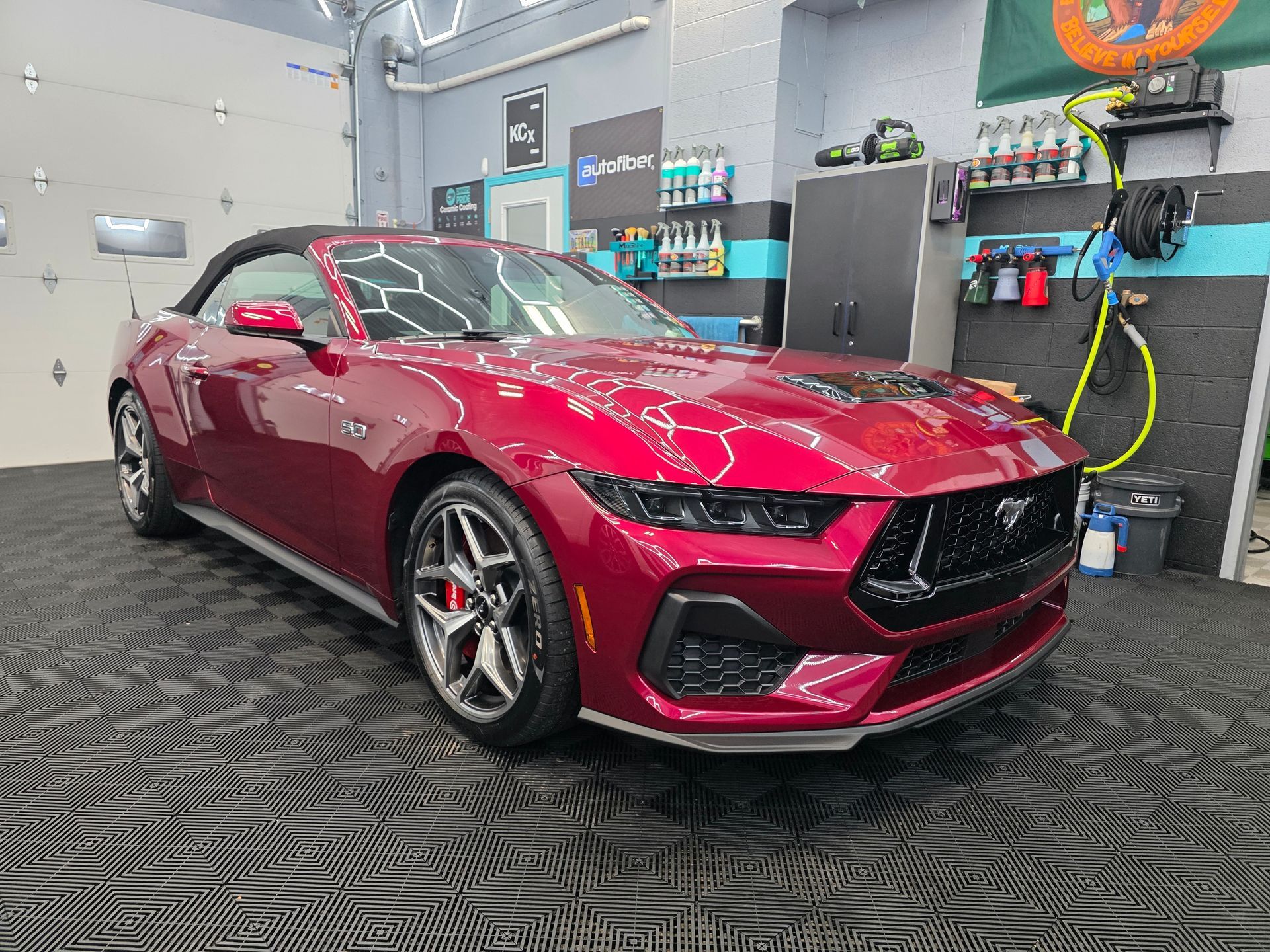
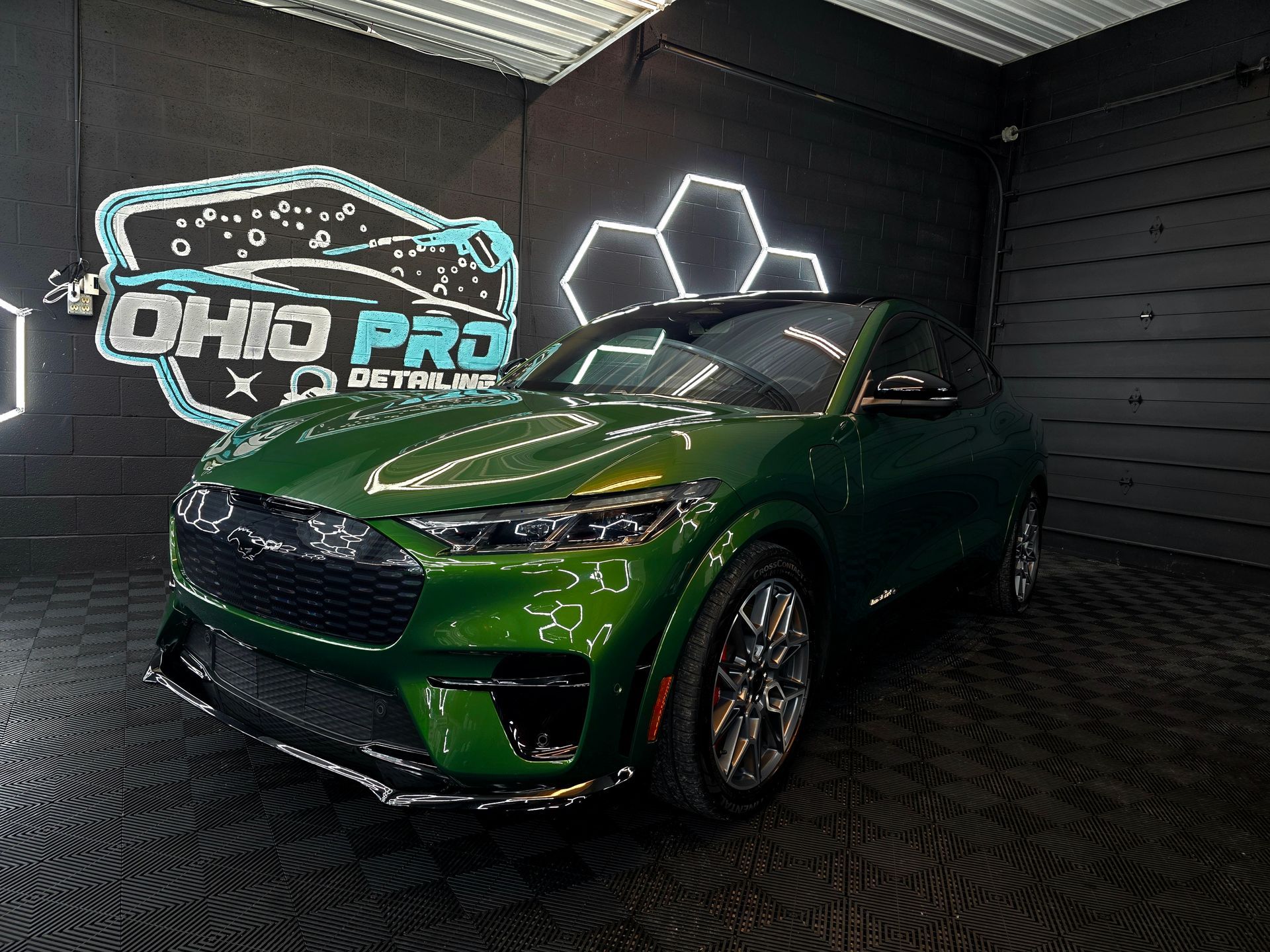
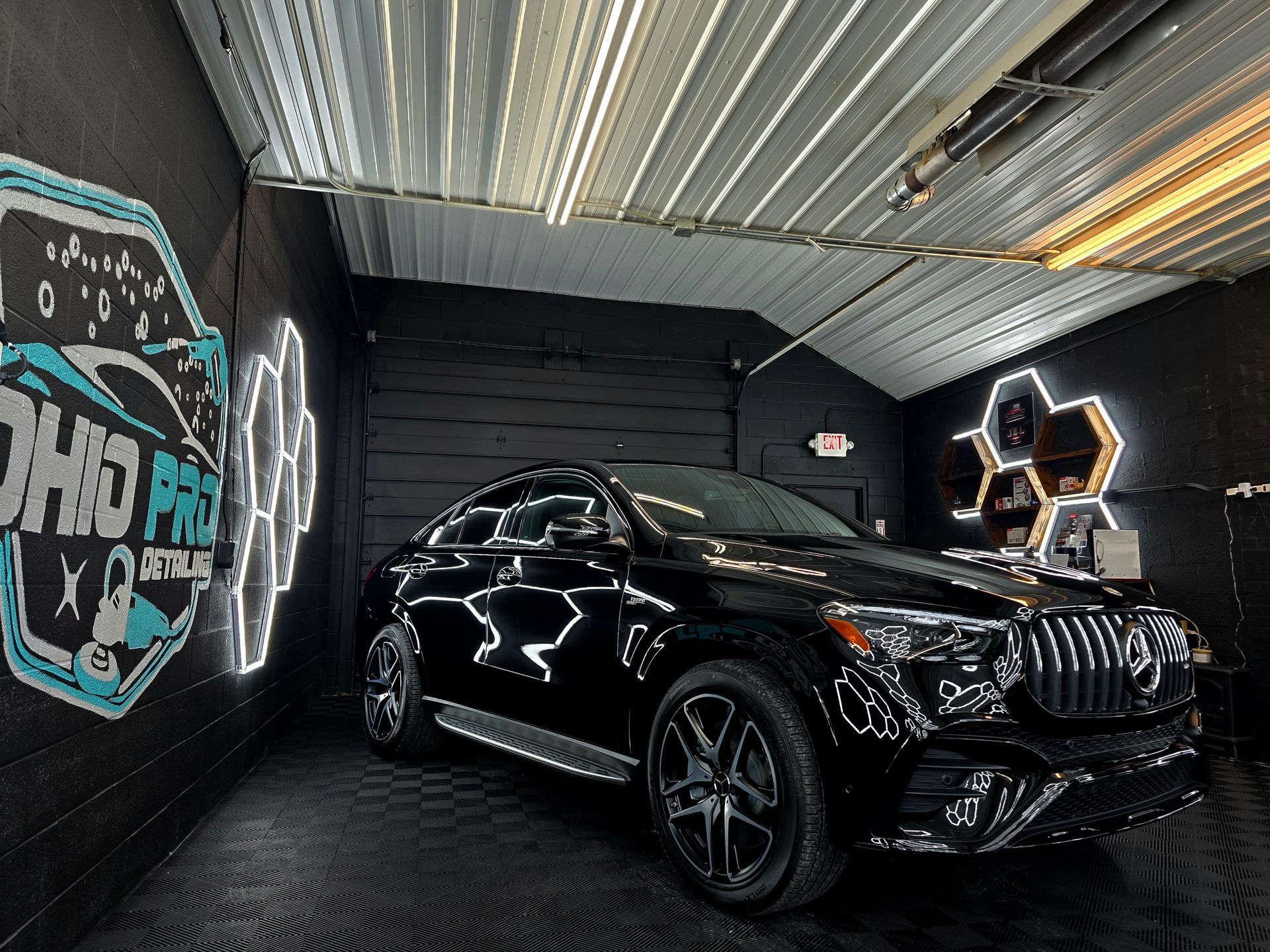
Ceramic coating is a liquid polymer that bonds directly to your clear coat instead of sitting on top of it the way wax does. Once it cures, you're left with a hard, glass-like layer that's hydrophobic, so water beads up and rolls off instead of clinging to the paint. You can't see it or feel it on the surface. What you will notice is how glossy the paint looks and how much easier it is to keep clean.
Ceramic coating is often confused with a “fancy” wax, but it’s not the same. Wax sits on the surface and wears off in a matter of weeks. Ceramic coating bonds to it and stays put for years. And unlike PPF, it isn't a physical barrier, so it won't stop a rock chip or a scratch from a key. What it does is make the surface slicker and more resistant to everyday grime and UV exposure, not impervious to damage.
How Ceramic Coating Actually Works
Before any coating goes on, the vehicle gets a full wash and decontamination to strip out dirt, road film, and anything bonded to the paint. If there are swirl marks or haze, we handle correction first, since the coating locks in the condition of the paint. From there, the coating gets applied by hand in thin sections and given time to flash before the next layer goes on. Once it's done, the vehicle needs to cure, usually 24 to 48 hours, before it can get wet or head back out on the road.
What Are the Perks of Investing In Ceramic Coating?
A Slicker, More Hydrophobic Surface
Water, dirt, and road grime have a harder time sticking to a coated surface, so washing takes less scrubbing and less time. Bugs and tar rinse off with a garden hose instead of needing to be picked at with a clay bar, and you'll notice the difference the first time you wash it.
Added UV and Chemical Resistance
The cured coating adds a layer of resistance against UV rays, bird droppings, and other contaminants that etch into unprotected paint left outside. That matters most if your vehicle spends more time in a driveway than a garage, especially through an Ohio summer where UV exposure and tree sap don't let up for months.
A Finish That Holds Its Value Over Time
Wax breaks down within weeks under regular driving and washing, which means reapplying it every month just to keep pace. Ceramic coating bonds to the surface instead of sitting on it, so it holds up for years with the right care, saving you both the cost and the weekend spent redoing it
Bottom Line
Ceramic coating is a bonded liquid layer, not a wax, sealant, or film. It's applied through a specific process that starts with proper prep, and it pays off in easier washing, added resistance, and a finish that holds up longer than anything else you could put on it. If you're ready to see what it looks like on your vehicle, reach out to our team for a quote.